HRIPT Testing for Cosmetics and Personal Care Products
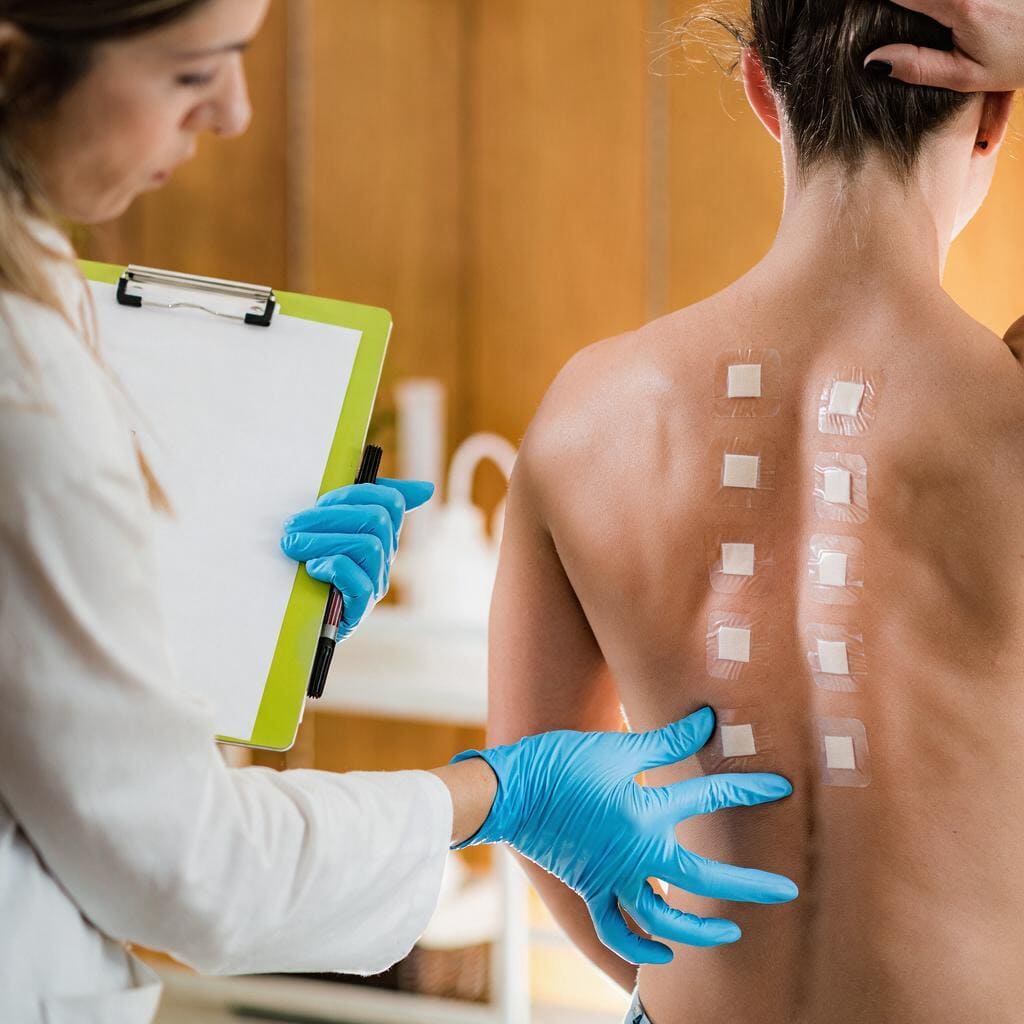
The Human Repeated Insult Patch Test, also known as HRIPT or RIPT, examines how the skin responds to repeated product applications followed by a challenge exposure.
The study provides information about the irritation and sensitisation potential of the finished product under controlled conditions.
SHAPYPRO adapts the study design to the product type, intended use and project objective, from protocol planning through to report interpretation.

What an HRIPT Study Evaluates
The skin compatibility of a cosmetic does not depend only on the known safety of its individual ingredients. Concentration, ingredient combinations, the product vehicle and the exposure pattern can all affect the response to the finished formulation.
An HRIPT is therefore planned around the formula consumers will use and a protocol defined before the study begins.
The study records observed skin reactions after repeated exposure. Following a period without application, a challenge phase helps assess whether a response consistent with sensitisation has developed.
Results are interpreted in the context of the formula history, the study population and the product's normal conditions of use.
Three-Phase Study Design
An HRIPT is generally organised into three consecutive phases. Each phase provides different information about the skin response and must follow the conditions defined in the protocol.
Induction
The product is repeatedly applied to a defined skin area at the frequency and under the conditions specified in the protocol. Each assessment documents the skin response during cumulative exposure.
Rest
The induction period is followed by an application-free interval. This separates repeated exposure from the challenge phase and is a standard element of HRIPT design.
Challenge
The product is applied again, usually to a skin site that was not used during induction. Comparing the observations helps assess the product's skin sensitisation potential.

A Study Designed Around the Product
One protocol cannot be applied unchanged to a face cream, a rinse-off product and a formulation intended for sensitive skin.
Before the study begins, SHAPYPRO reviews the composition, dosage form, application site, contact time and directions for use. This review determines whether the product should be applied as supplied, diluted or under other defined conditions.
Participant selection and inclusion criteria must also reflect the project objective. If the evidence is intended to support communication for sensitive skin, the population and the wider evidence package must be consistent with that claim.
A favourable HRIPT result contributes to the safety assessment, but it does not prove that a product can never cause an allergic reaction in any individual.
From Protocol to Technical Report
The study must be documented from the initial review through to interpretation of the results. These four elements maintain traceability between the product, protocol and final conclusions.

Preliminary Review
We assess the formula, directions for use, available background information and proposed claim before recommending a study.

Protocol and Oversight
We define application conditions, assessment points and evaluation criteria, together with clinical oversight and participant follow-up.

Result Evaluation
Observations are reviewed against the protocol and interpreted with any deviations, withdrawals and relevant reactions in view.

Final Report
The report identifies the tested product, method, population, results and conclusions within the actual limits of the study.
Claims and Safety Documentation
The HRIPT result must be interpreted within the product safety assessment and communication strategy. The clinical report, product file and claims should describe consistently what was studied and what the evidence can support.
Evidence for Safety and Claims
HRIPT data can form part of finished-product safety substantiation and a claim support strategy for wording such as “dermatologically tested”, “non-irritating” or “suitable for sensitive skin”.
The final wording must correspond to the study design, the population included and the result obtained.
Integration into the Product File
SHAPYPRO relates the clinical report to the toxicological assessment, intended use and other available documentation.
The result becomes part of a coherent safety rationale instead of remaining a standalone test.
Communication Review
Before a claim is used, we review its scope and supporting evidence. Terms such as “hypoallergenic” require particular care and a combined assessment of the formula, ingredients and finished-product data.
Working Methodology
Define the Objective
We agree on what the project needs to establish and where the results will be used.
Complete the Technical Review
We assess the formula, intended use, labelling and available safety information.
Design the Study
We prepare the protocol, population and application conditions suited to the product.
Conduct and Monitor the Study
Planned applications and clinical assessments are completed, with incidents, withdrawals and deviations documented.
Report and Interpret
We provide the results and a conclusion that reflects the scope of the study and its intended documentary use.
Frequently Asked Questions About HRIPT Testing
How Does an HRIPT Differ from a Simple Patch Test?
A simple patch test observes the skin response after limited exposure. An HRIPT includes repeated applications, a rest period and a challenge phase, providing additional information about cumulative irritation and sensitisation potential.
Is HRIPT Testing Mandatory for Every Cosmetic?
There is no general requirement to perform an HRIPT on every cosmetic product. The need for the study depends on the product, risk assessment, available data, target market and claims to be supported.
Does a Favourable Result Support a Hypoallergenic Claim?
The result may contribute to the evidence, but it should not be considered in isolation. The composition, ingredient profile, study population and exact claim wording must also be reviewed.
Can Rinse-Off Products Be Evaluated?
Yes, provided that the protocol reasonably reflects product use. A defined dilution, contact time or preparation step may be needed before application.
What Information Is Needed for a Quotation?
The qualitative and quantitative formula, product type, directions for use, target market and study objective allow us to prepare an appropriate technical proposal.

An HRIPT Study Adapted to Your Product
Tell us what you are developing, how it will be used and what evidence you need. The SHAPYPRO team will review the project and recommend a study aligned with the formula, intended use and claim strategy.