Challenge Test for Cosmetics and Preservative Efficacy
SHAPYPRO coordinates Challenge Test services to assess the efficacy of preservative systems in cosmetic products and other formulations for which this type of study is applicable.
The test verifies whether the product maintains adequate microbiological protection against controlled contamination, providing useful information for formulation development, safety assessment and technical documentation.
- Preservative efficacy
- ISO 11930
- Microbiological safety
- Traceability


What the Challenge Test Is
The Challenge Test, also known as a preservative efficacy test or microbiological challenge test, assesses a formulation’s ability to control microbial contamination introduced deliberately under standardised conditions.
During the study, the product is inoculated with reference microorganisms and tested at defined time points to determine their reduction or persistence. The results indicate whether the preservative system provides the expected protection during use and throughout the intended shelf life.
For cosmetics, this study is an important part of microbiological quality assessment and should be interpreted together with the formulation, packaging, conditions of use, routine microbiological control and product safety assessment.
When a Challenge Test Is Needed
The need for testing depends on the microbiological risk of the product, its composition, preservative system, packaging, conditions of use and the requirements of the target market.
Water-Based or Microbiologically Susceptible Formulations
Products whose composition or water activity may support the survival or growth of microorganisms.
Development of New Formulations
Assessment of the preservative system during development to confirm its suitability before the formulation is finalised.
Reformulation or Preservative Changes
Verification of microbiological protection after changing ingredients, concentrations or preservative combinations.
Process or Packaging Changes
Assessment of the potential impact of modifications to manufacturing, filling, applicators or closure systems.
Confirmation of Microbiological Safety
Generation of evidence to support the safety assessment and technical documentation of the product.
Investigation of Unsatisfactory Results
Repeat or redesigned testing after preservation, stability or contamination issues have been identified.
Standards and Evaluation Criteria
The method and acceptance criteria must be selected before testing according to the product category, target market and purpose of the assessment. The available references are not interchangeable and may use different organisms, time points and interpretation criteria.

ISO 11930
The main reference for assessing antimicrobial protection in cosmetic products and classifying preservative system performance.
ISO 29621
Guidance for identifying microbiologically low-risk cosmetic products through a documented assessment of their characteristics and conditions of use.
USP <51>
A reference method for assessing antimicrobial preservative effectiveness in product categories covered by the United States Pharmacopeia.
European Pharmacopoeia 5.1.3
A reference applicable to certain pharmaceutical products and preparations requiring an assessment of antimicrobial preservation.
PCPC Methods and Other Protocols
Alternative approaches may be used when required by the product, market or technical objective, provided that the protocol and evaluation criteria are defined in advance.
How the Test Is Performed
The Challenge Test exposes the product to controlled contamination and monitors the inoculated microorganisms over a defined period. The protocol must ensure traceability of the sample, inocula, test intervals and counts obtained.
Technical Product Review
Review of the formulation, product category, preservative system, packaging, intended use and available documentation.
Protocol Definition
Selection of the reference method, microorganisms, inoculation conditions, sampling times and evaluation criteria.
Controlled Inoculation
Introduction of reference microorganisms at defined levels to subject the formulation to a reproducible microbiological challenge.
Monitoring and Enumeration
Measurement of the evolution of each microorganism at the established time points and calculation of the reductions achieved.
Evaluation and Reporting
Comparison of the results with the applicable criteria and issue of a technical report containing the method, results and conclusions.
Microorganisms and Result Evaluation
The microorganisms are selected according to the applicable standard or protocol. Cosmetic Challenge Tests commonly use reference strains representing bacteria, yeasts and moulds.
Common Microorganisms

Pseudomonas aeruginosa
A Gram-negative bacterium of particular relevance to the microbiological control of water-based products and manufacturing environments.
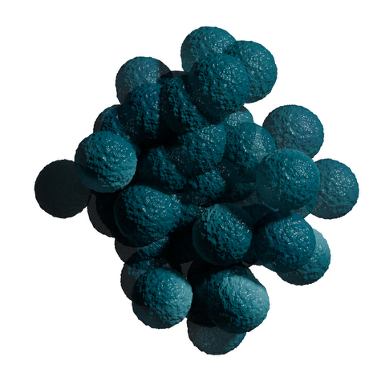
Staphylococcus aureus
A Gram-positive bacterium used to assess the formulation’s performance against this microbial group.

Escherichia coli
A Gram-negative reference organism included in antimicrobial protection assessments.
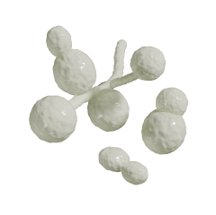
Candida albicans
A yeast used to assess preservative efficacy against fungal contamination.

Aspergillus brasiliensis
A mould used to evaluate the response of the product to filamentous fungi.
Interpretation
Criterion A
Indicates that the observed reduction reaches the level of protection recommended by the selected reference.
Criterion B
May be considered acceptable when the risk assessment and safety documentation justify that the protection is adequate for the product and its intended use.
Non-Compliant Result
Indicates that the preservative system does not meet the defined criteria and that the causes must be investigated, the formulation reviewed or the study repeated after modification.
Benefits for Development and Safety
The Challenge Test provides specific evidence of the preservation capacity of the formulation and supports decisions before placing the product on the market or after a significant change.
Preservative Efficacy Assessment
Confirms whether the selected preservative system adequately controls the reference microorganisms.

Support for Safety Assessment
Provides data that can be integrated into the assessment of product quality and microbiological safety.
Formulation Optimisation
Supports comparison of alternatives and adjustment of the preservative system during development or reformulation.
Incident Prevention
Helps identify insufficient protection before it leads to product alteration, complaints or recalls.
Technical Documentation
Generates results and reports useful for dossiers, audits, internal evaluations and regulatory processes.
Process, Results and Documentation
SHAPYPRO coordinates each study based on product information and the technical objective, defining the most suitable protocol and the documentation required for clear interpretation of the results.
Information and Sample Review
Review of the formulation, preservative system, packaging, intended use, development stage and available sample quantity.
Technical Proposal
Definition of the standard or protocol, study scope, estimated timing and evaluation criteria.
Study Coordination
Monitoring of the test and communication during the relevant stages of the project.
Technical Interpretation
Assessment of the results against the selected criteria and identification of any need for review.
Final Report
Delivery of structured documentation containing sample identification, method, conditions, results, interpretation and conclusion.
Microbiological Safety and Related Studies
A Challenge Test does not replace routine microbiological control. The two studies answer different questions: microbiological control determines the current status of the sample, while the Challenge Test assesses the formulation’s response to controlled contamination.
Interpretation may be complemented by stability studies, packaging review, water activity analysis, microbiological control and safety assessment, depending on the characteristics of the product and the project stage.


Challenge Testing Adapted to Each Formulation
Each formulation has specific characteristics that influence its microbiological risk and preservative efficacy. The study must therefore be adapted to the product, development stage, target market and applicable technical requirements.
The objective is to provide reliable results, clear documentation and technical support for assessing preservative efficacy and the microbiological safety of the product.